Review: Delaware Keepers: Life at the Edge of the Sea by Dave Tabler
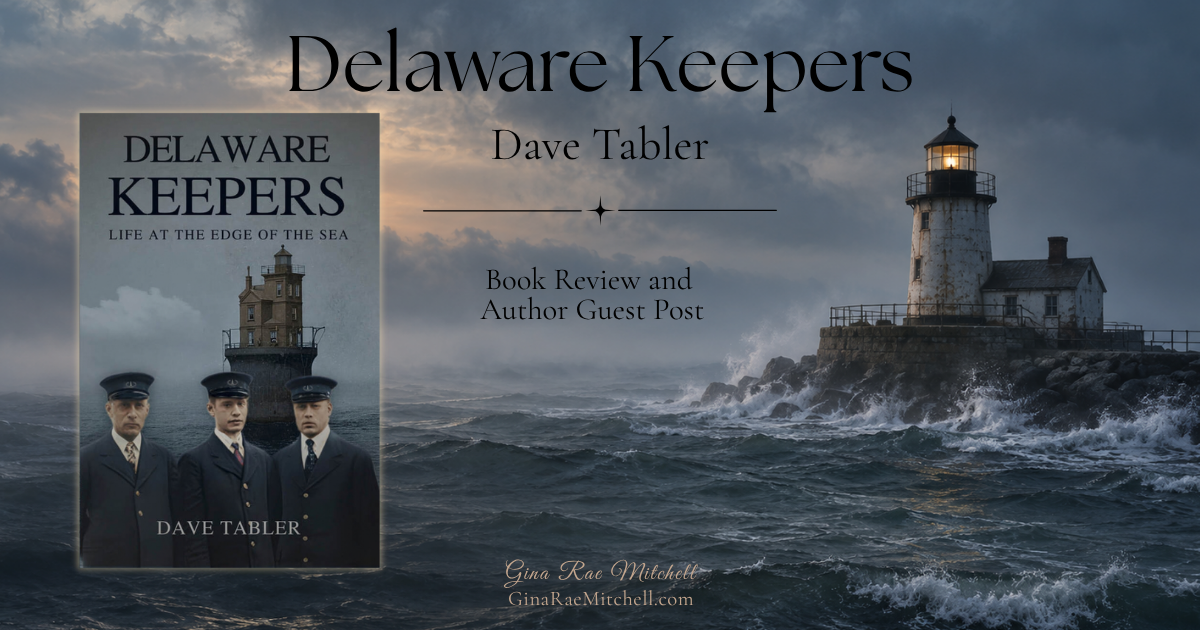
The lights that still stand along Delaware's coast now guide memory rather than ships.
When we picture a lighthouse, it is easy to focus on the tower, its sweeping beam, or the dramatic waters surrounding it. Delaware Keepers: Life at the Edge of the Sea invites us to look instead at the people who kept those lights burning: the men and women whose work, endurance, and family lives helped make one of America's most dangerous coastlines safer.
In this deeply researched history, Dave Tabler moves beyond the familiar myths of solitary, weathered keepers to uncover the real people behind Delaware's coastal lights. From colonial-era stations to the final years before automation, he traces lives shaped by responsibility, isolation, community, and often remarkable courage.
I have enjoyed several of Tabler's earlier books about Delaware history, and this one offers another richly human piece of the state's past. I am also pleased to welcome Dave today with a guest post about why this small state continues to offer him so many stories worth telling.
Book Details
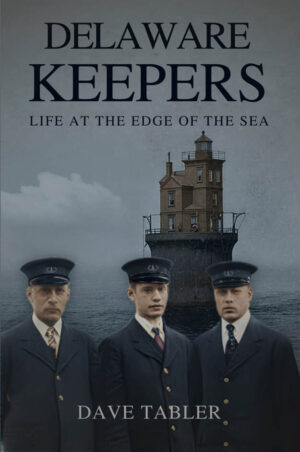 Delaware Keepers: Life at the Edge of the Sea
 By Dave Tabler
Published by Independent Author on June 2026
Genres: History, Non-fiction
Formats: Audiobook, eBook, Hardcover, Paperback
Pages: 225
For more than 170 years, Delaware’s lighthouse keepers guarded one of the most dangerous coastlines in America. Their lives unfolded far from the spotlight, yet their work shaped maritime safety, coastal communities, and generations of families who lived at the edge of the sea.
Delaware Keepers: Life at the Edge of the Sea tells the largely untold story of these men and women—from the first keeper appointed in 1769 to the quiet end of human watchkeeping in the mid-twentieth century. Drawing on newspapers, government records, congressional testimony, and family histories, the book reveals lighthouse keepers not as lonely eccentrics or tragic figures, but as skilled federal employees whose lives blended technical responsibility, civic duty, and family endurance.
The story begins at Cape Henlopen during the colonial era, when keepers worked under primitive conditions amid political upheaval. During the Revolutionary War, Elizabeth Dickerson reportedly burned the lighthouse rather than allow it to guide British ships. In the early republic, keepers like Abraham Hargis pleaded with President Thomas Jefferson for relief from isolation and financial hardship, exposing the human cost of maintaining the nation’s coastal lights.
As lighthouse construction accelerated in the nineteenth century, so did the challenges. New technologies, inadequate training, and bureaucratic neglect left many keepers struggling. Reform came in 1852 with the creation of the U.S. Lighthouse Board, which professionalized the service and reshaped daily life at the stations. The Civil War tested that system, while producing a generation of keepers—often war veterans—who elevated the role’s public standing.
Contrary to popular myth, most keepers lived stable lives rooted in family and community. They raised children, joined churches and civic groups, and served for decades at the same stations. When tragedy struck, it stemmed from specific circumstances, not inevitable madness. The book replaces legend with lived reality.
Many keepers became local leaders. George W. Duncan organized bands and baseball teams while tending the Port Penn Range Lights. Harry E. Spencer fought through Delaware’s worst recorded snowstorm to reach his post. Irvin S. Lynch raised nine children at the isolated Mahon River Light while conducting rescues, including saving survivors from a wrecked barge during the Great Depression. Others repeatedly risked their lives to save strangers along Delaware’s coast.
The book also gives voice to lighthouse families. Hannah Hill’s 1950 congressional testimony reveals decades of sacrifice—dragging boats across ice, losing children at remote stations, and keeping lights burning alone during illness—offering a rare account of life beyond official records.
The final chapters follow the profession’s disappearance as automation replaced human watchfulness and the Lighthouse Service merged into the Coast Guard in 1939. Abandoned stations were dismantled, their materials scattered, and much of Delaware’s lighthouse heritage nearly erased. Preservation efforts emerged only decades later, led by descendants, educators, and local advocates determined to save both structures and stories.
The lights that still stand along Delaware’s coast now guide memory rather than ships. Delaware Keepers restores the people behind those lights—revealing a forgotten chapter of American history shaped by service, responsibility, and quiet heroism in times of storm and darkness.
I received a complimentary copy of this book for review. All opinions and thoughts shared here are entirely my own.
This post contains affiliate links. If you make a purchase through one of these links, I may earn a small commission at no additional cost to you.
Reader Resources
Reader Info at a Glance
| Best For | Readers who enjoy local history, maritime history, and the human stories behind familiar landmarks. |
|---|---|
| Pacing | Steady and engaging, with one well-researched story leading naturally to the next. |
| Overall Feel | Thoughtful, warm, and deeply respectful of the ordinary people who did extraordinary work. |
| Setting | Delaware's coast and waterways, from the colonial era through the age of lighthouse automation. |
| Readability | Accessible history told with the intimacy of stories passed from one generation to the next. |
| Themes | Service, family, community, resilience, preservation, and life at the edge of the sea. |
| Rating | ★★★★★ |
Quick Take
Delaware Keepers: Life at the Edge of the Sea is a richly researched, quietly compelling history that brings Delaware's lighthouse keepers and their families out of the shadows. Rather than simply cataloging stations and dates, Dave Tabler tells the human stories of the people who kept the lights burning through hardship, isolation, storms, and enormous change.
Things to Know
- This is not a general history of Delaware lighthouses. Its focus is the real people who served as keepers and the families who shared the work and sacrifice.
- The book spans more than two centuries, from the colonial era through the automation that ended human watchkeeping.
- Expect archival research, newspaper accounts, family histories, and government records woven into an approachable narrative.
- It is especially rewarding for readers who enjoy regional history, maritime stories, genealogy, preservation, or overlooked American lives.
- Though centered in Delaware, the themes of service, family endurance, and community make the stories meaningful well beyond the state.
Let's look at what made this reading experience distinctive.
My Thoughts
Lighthouses have long captured our imagination. We admire them in photographs, paintings, travel guides, and home decor, but we do not always stop to think about the people who made their purpose possible. Someone had to keep the light burning through dark nights, storms, illness, isolation, and long stretches away from the comforts most of us take for granted.
That is what makes Delaware Keepers so special. This is not simply a history of buildings or maritime technology. It is the story of the women and men who tended those lights, the families who lived beside them, and the communities shaped by their quiet service. Tabler gently replaces the familiar image of the craggy old lighthouse keeper with something far more interesting: real people with responsibilities, hopes, hardships, children, neighbors, and lives beyond the beam.
As always in a Dave Tabler book, the research shines through. He draws from newspapers, family papers, government reports, and oral history to uncover details that might otherwise have disappeared. Yet the result never feels dry or distant. He has a gift for presenting history like a story passed from one generation to another, with all the heart, texture, and unexpected moments that make us want to keep listening.
I have reviewed several of Tabler's books about Delaware, and I am still amazed by the depth of heart, soul, and joy he finds in the history of a small state. Delaware Keepers is another wonderful example of why local history matters. When it is told with this much care, it becomes a story about all of us.
Final Thoughts
Thoughtful, well researched, and deeply human, Delaware Keepers: Life at the Edge of the Sea is a rewarding read for history lovers, lighthouse enthusiasts, and anyone who enjoys discovering the people behind the places they thought they knew. Dave Tabler has once again turned overlooked history into a story worth remembering.
Book Trailer
Watch the trailer for Delaware Keepers: Life at the Edge of the Sea.
Guest Post: Why Do You Only Write About Delaware?
By Dave Tabler
The honest answer starts in a movie theater in 1969, when I was a ninth grader holding down the best job on my school newspaper: reviewing movies.
I know the date because my mother told me, in a letter I would not read for another half century. Pat Tabler wrote home to her own mother every week or two, and in the fall of that year she reported the news from my beat. The teacher had assigned me Goodbye, Columbus, which I could only see accompanied by an adult, so my parents took me. Mom recorded the verdict. "The review showed a surprising amount of insight." Mothers are not neutral critics. I quote her anyway.
Later that year, Steve McQueen opened in The Reivers, and I reviewed that one too. It follows Lucius Priest, an eleven-year-old Mississippi boy who helps steal his grandfather's automobile and comes of age on the road to Memphis. I was fourteen, and the distance between us felt like nothing. I wanted the source, so I spent ninety-five cents on the Signet movie tie-in paperback and read my first William Faulkner.
Its front matter made a claim that stopped me. Faulkner, it said, had set all his fiction in one invented Mississippi county called Yoknapatawpha. The publisher oversold the point, but the larger truth held. Here was a writer who took one tiny county of his own invention and made it the center of a career that brought him two Pulitzers and the Nobel Prize. His own "little postage stamp of native soil," he called it. I had no idea the page had just planted a seed.
That seed sat dormant for fifty years. It waited patiently while I went about building a non-writing career. When I retired to Delaware and announced I would write books about it, a Brooklyn friend laughed. How much can you possibly say about such a tiny place? I had no snappy Faulkner comeback that day. What I had was a conviction. I knew there was a potential trap: if all I produced was good-old-days nostalgia, the skeptics would be right. But if I could dig deeper and mine Delaware for stories that resonate as universal human stories, the size of the place would stop mattering. Everything since has been a bet on that "if."
Three books into the Delaware project, I was reminded where that conviction came from. I happened to be transcribing my mother's letters at the time, a separate family project altogether, and came upon the one about the movie reviews. The whole chain lit up. The assignment, the McQueen paperback, that Signet page insisting one county could hold a whole world. The kid with a press pass and ninety-five cents had absorbed a Big Truth and carried it in muscle memory for half a century. I now write about Delaware without a flicker of doubt, because I have a spirit guide, and he won the Pulitzer Prize. Twice.
One last number. On the map Faulkner drew for Absalom, Absalom!, Yoknapatawpha measures 2,400 square miles. Delaware measures 2,489. I have more territory than Faulkner had, and he worked in fiction. I work in history, and Delaware still has plenty left in the seam to be excavated.
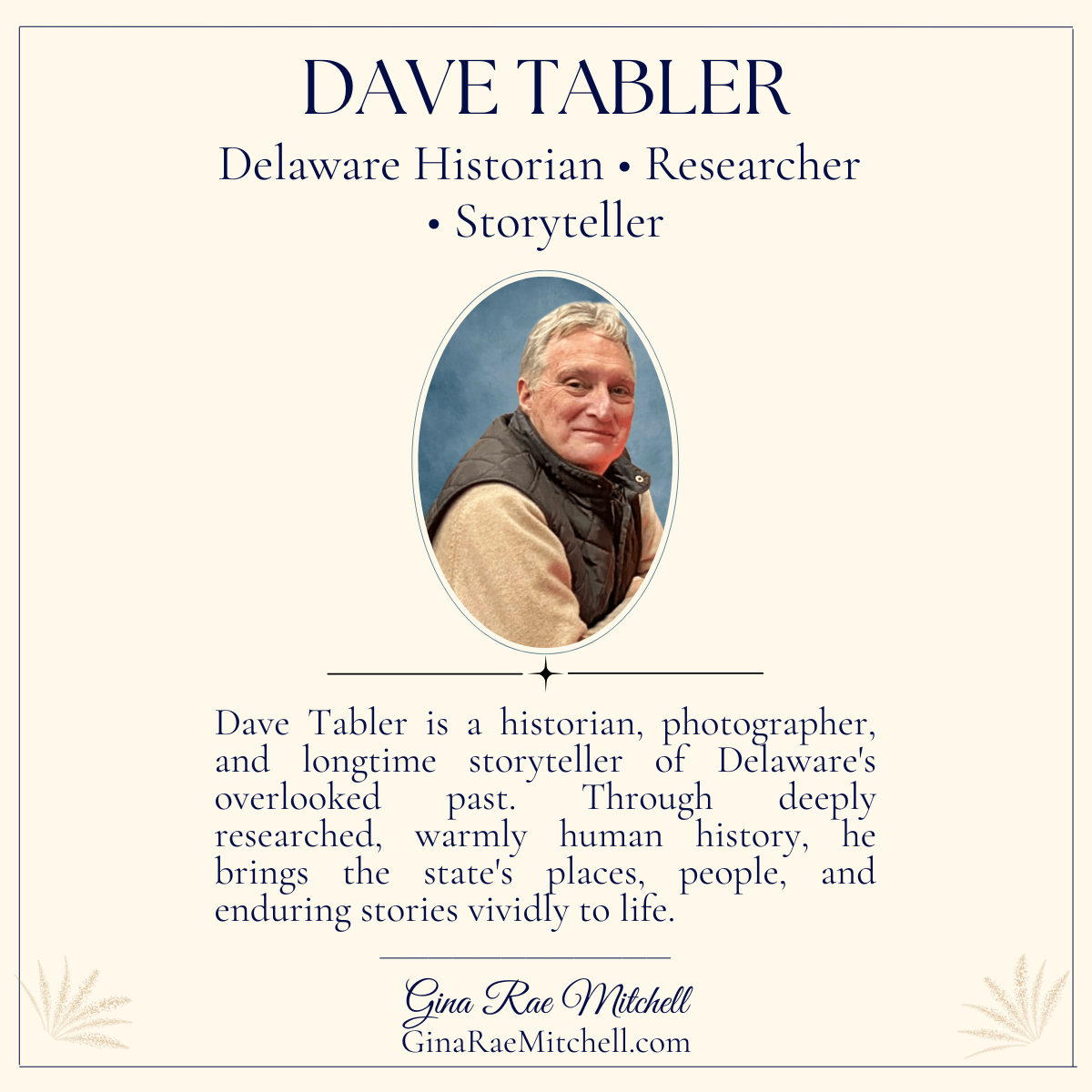
Meet the Author
Please join me in welcoming Dave Tabler, the historian and storyteller behind this beautifully researched look at Delaware's lighthouse keepers.

Learn more:
Website | Amazon | Goodreads | Author Hub
Where to Buy
Ready to add Delaware Keepers: Life at the Edge of the Sea to your reading list? Here are a few ways to get your copy.
Support Local Bookshops
Prefer to support independent bookstores? Shop through Bookshop.org below, where online orders support local bookstores.
If the widget doesn't appear, refresh the page or use the button above.
Happy reading-and thanks for supporting authors, reviewers, and independent bookstores.
Tour dates: September 8 to October 5, 2026. To see the full schedule of stops, visit the
iRead Book Tours page.
Get Friday Finds + Bookish Extras
Join me for Friday Finds, cozy reads, and bookish discoveries delivered straight to your inbox.
A beautiful review of an enticing place with such an awe-inspiring history. I appreciate the research and the story behind the book(s).