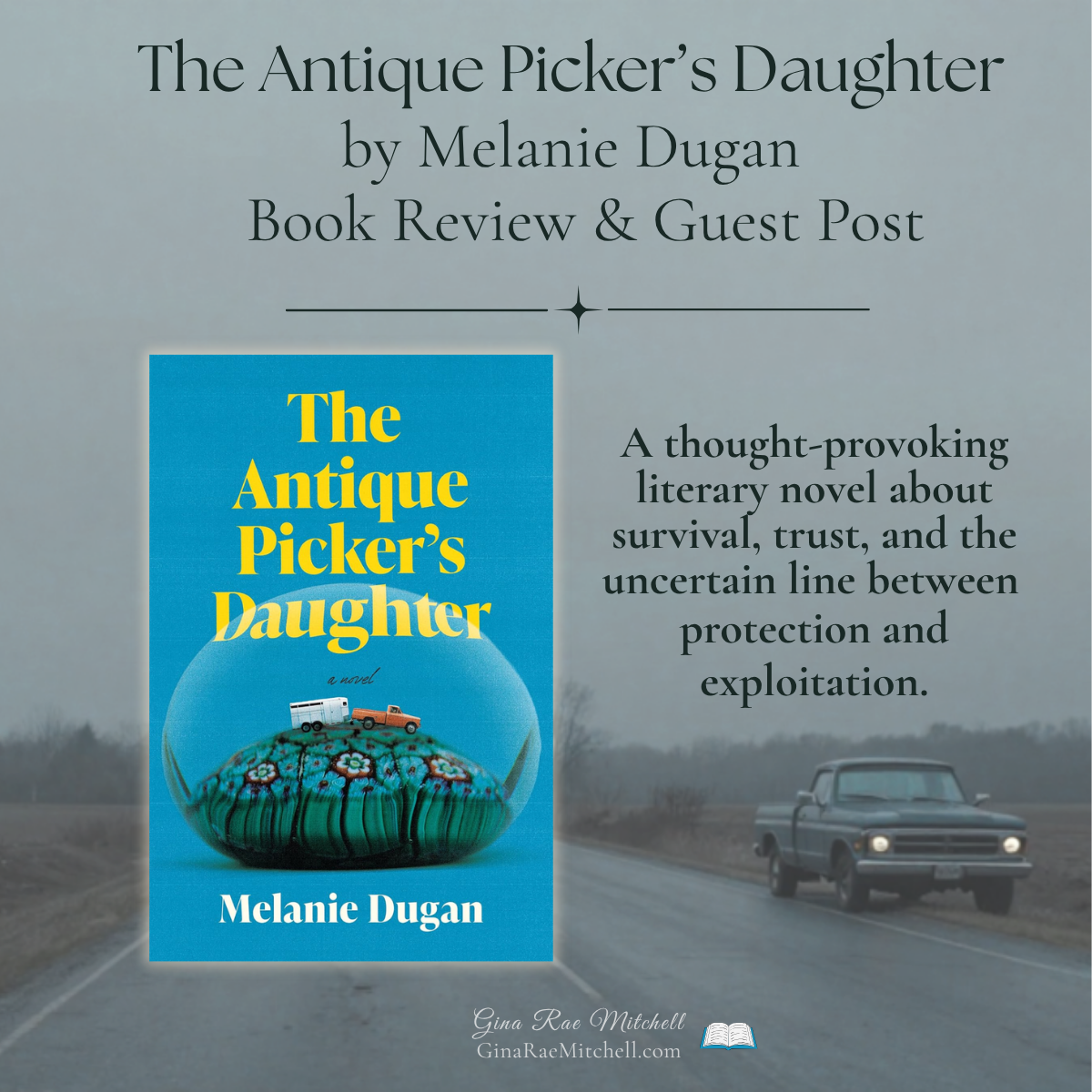
The Antique Picker's Daughter by Melanie Dugan | Book Review & Guest Post
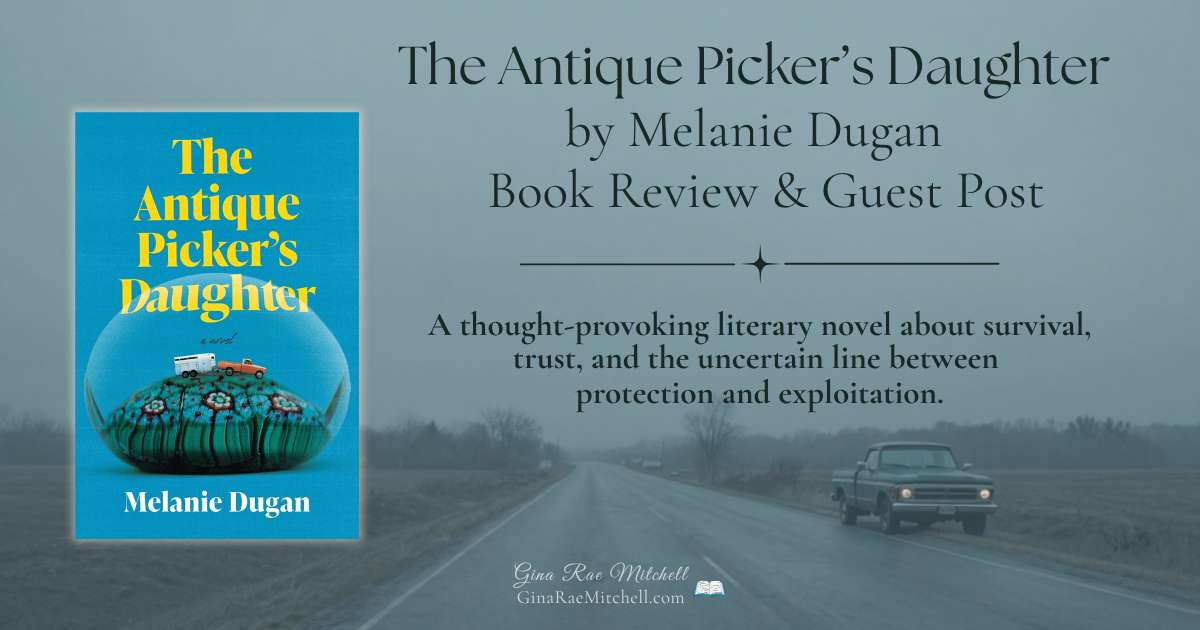
"The first thing you need to know: They're not antiques.
The second thing you need to know: I'm not his daughter."
What begins as an escape from an unstable home becomes a morally complicated journey through southern Ontario, where the difference between rescue and exploitation is never entirely clear.
Today, I am joining iRead Book Tours to share my thoughts on The Antique Picker's Daughter by Melanie Dugan. This literary novel follows a homeless teenager and the enigmatic older man who teaches her how to survive by buying, stealing, and reselling other people's belongings.
The story raises difficult questions about trust, vulnerability, and the relationships people form when safer choices seem out of reach. My tour stop also includes a guest post from Melanie Dugan about how she uses flexible outlines while allowing her stories and characters to change direction.
Book Details
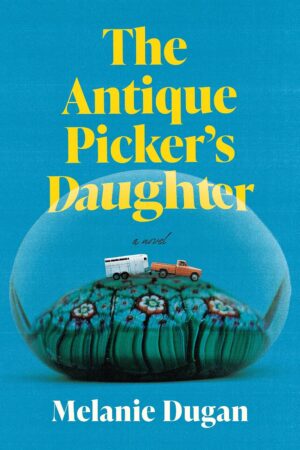 The Antique Picker's Daughter
 By Melanie Dugan
Published by Inanna Publications & Education Inc. on September 2026
Genres: Adult Fiction 18+, Literary Fiction
Formats: Paperback
Pages: 250
Abandoned first by her father, and then by her mother, Frankie has been left in the care of her deeply religious grandmother. When her grandmother’s religious convictions tip into delusion, Frankie decides to run away.
Life on the street in Toronto is hard, and with winter coming, it gets tougher. This is when Frankie first meets Francis, a man old enough to be her father. He starts training her in “the game,” as she comes to call it; buying, stealing, and reselling “inventory” at inflated prices. Through winter, spring, and early summer, the two become a team, traveling around small towns and villages in southern Ontario.
As Frankie discovers, life on the road holds dangers she can’t anticipate, and her precarious world tips into disaster when Francis abandons her in an unfamiliar town. Betrayed, alone, and deserted, Frankie realizes she’s in a dangerous situation — will she be able to find her way out on her own?
The Antique Picker’s Daughter explores youth homelessness, human trafficking, and one young woman’s search for safety.
I received a complimentary copy of this book for review. All opinions and thoughts shared here are entirely my own.
This post contains affiliate links. If you make a purchase through one of these links, I may earn a small commission at no additional cost to you.
Reader Resources
Reader Info at a Glance
| Best For | Readers who enjoy morally complex, character-driven literary fiction |
| Pacing | Uneven, with slower information-heavy passages and abrupt shifts |
| Overall Feel | Gritty, unsettling, and thought-provoking |
| Themes | Youth homelessness, survival, trust, exploitation, and safety |
| Setting | Toronto and the small towns and backroads of southern Ontario |
| Central Tension | Is Francis protecting Frankie or exploiting her? |
| Rating | ⭐⭐⭐⭐ • Weighted CAWPILE: 7.18 |
Curious how I rate books? Read my full rating system here.
Quick Take: Read this for its engaging central characters and morally complex exploration of survival, trust, and the uncertain boundary between protection and exploitation.
Things to Know:
- Mature subject matter. The story addresses youth homelessness, human trafficking, physical abuse, and exploitation, with some rough language.
- Nonlinear storytelling. Much of Francis's backstory is revealed through accounts from secondary characters, creating frequent shifts away from Frankie's immediate journey.
- Moral ambiguity. The novel leaves readers to decide whether Francis is protecting Frankie, exploiting her vulnerability, or doing some of both.
Here's how the book worked for me as a reader.
My Thoughts
The premise of The Antique Picker's Daughter immediately caught my attention. Frankie is a vulnerable but capable teenager trying to survive after the adults responsible for her have failed her. When Francis enters her life and begins teaching her what he calls "the game," their unusual partnership creates both opportunity and danger.
Frankie and Francis are engaging characters, and their relationship is the strongest part of the novel. Francis gives Frankie companionship, practical knowledge, and a way to survive, but he also draws her into theft and increasingly unsafe situations. I kept returning to the same question: Was Francis saving Frankie or exploiting her? The story does not provide an easy answer, leaving readers to interpret his motives and the complicated power imbalance between them.
The pacing was less successful for me. It felt erratic, moving between compelling scenes on the road and lengthy passages explaining Francis's history. Much of this information is presented through stories told by secondary characters. These sections often felt like information dumps and pulled me away from Frankie's immediate journey. Although the additional perspectives provide important context, the method of delivering that background interrupted the story's momentum.
Despite those structural concerns, the novel explores a relevant and difficult subject. Frankie's experiences highlight the vulnerability of homeless teenagers and how easily the promise of safety can become another form of control. The moral uncertainty surrounding Francis made the story thought-provoking, even when its nonlinear presentation made it less absorbing than I had hoped.
Final Thoughts
The Antique Picker's Daughter is a morally complex literary novel with an engaging premise and two memorable central characters. The uneven pacing and frequent backstory interruptions affected my connection to the narrative, but Frankie's search for safety and the unanswered questions surrounding Francis gave me plenty to consider. Readers who appreciate character-driven fiction, unconventional storytelling, and relationships that resist simple conclusions may find this an especially compelling read.
Here's a little more about the author behind the book.
Meet the Author
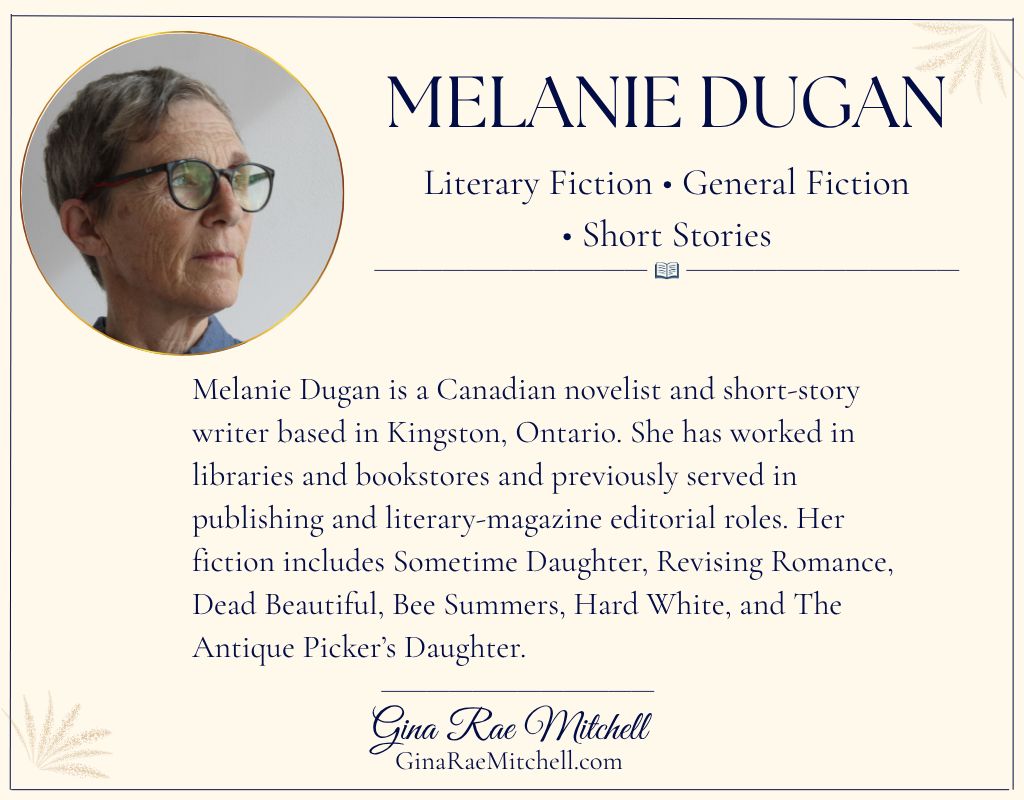
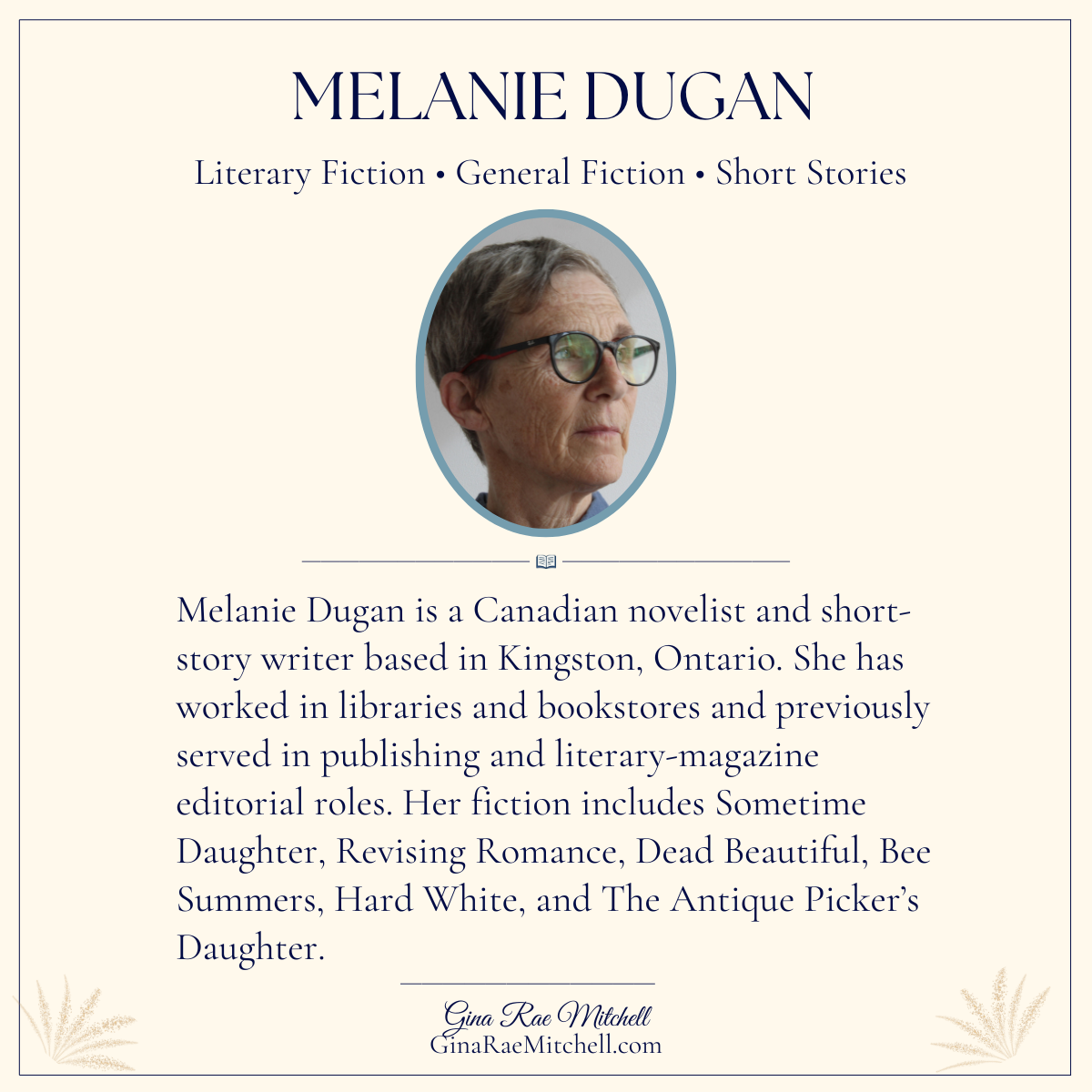
Melanie Dugan brings extensive experience with books and literary publishing to her fiction. In addition to working in libraries and bookstores, she has served as Associate Publisher at Quarry Press and held editorial roles with several Canadian literary magazines. Her short stories have also been shortlisted for awards, including the CBC Literary Award.
Learn more:
Website | Amazon | Goodreads
Author Guest Post
I'm pleased to welcome Melanie Dugan to the blog today. In this guest post, she shares how she uses outlines as flexible blueprints while allowing her characters and stories to lead her in unexpected directions.
To Outline or Not to Outline, That Is the Question
By Melanie Dugan
People ask whether I work from an outline when I'm writing a novel. Well, here's the thing: yes and no.
In my experience, stories are kind of quirky. If I sit down and draw up an outline, there are two problems. One, if I know how the story ends, why bother telling it? It's yawn-inducing to have to tell a story I already know. Two, if I persist and keep writing despite this, it often happens that I get to a certain point and the engine stops. The story cuts out. The narrative engine dies. Momentum evaporates.
I am unable to move forward. I write what I think should be the next scene, but it's predictable, flat, and boring. I'm bored, which is a bad sign, because if I'm bored, you can bet the reader will get bored too. At that point, I am unable to go on. Ennui overcomes me, and I need to take a nap or eat some chocolate.
Earlier, when I was starting out in this novel-writing business, before I understood the process, I would fight that malaise and try to keep writing, advancing stubbornly in the direction the outline spelled out. I spent (read: wasted) a lot of time this way, and the outcome was never satisfactory. It was like trying to stuff a round peg into a square hole-frustrating, irritating, and pointless.
So, in a snit, I would walk away from what I was working on, leave the pages on my desk, my amour-propre offended. Fine, I thought, if you won't play by my rules, I am finished with you. I will find more satisfying things to do, such as weed the garden or read a gossip blog.
But I found that while I was snitting, my mind kept returning to the project. Suggestions would bubble up: What if, instead of doing this, the protagonist does that? What if, instead of working toward this ending, the story is actually moving toward another ending? What if, what if, what if?
Or one of the characters might say, "You are not the boss of me. I'm not doing what you've got planned; I'm going to do this other thing-see how you like that!" When this happened, the character often revealed things I did not know about them. The story would move in unexpected directions, and I'd get interested again.
Then I'd recalibrate and decide, "Oh, I guess this is the story"-whichever way the story had detoured-and I'd come up with another outline, until the same thing happened again.
I can't write a story if I know precisely what the ending is. For me, a story is always an exploration, an investigation. On the other hand, a story is about something. There needs to be what someone once described to me as the rod: the armature on which the story is built. That suggests a structure of some kind, which is what a plot is and what an outline gives you.
So, for me, an outline is not set in stone. It's mutable, adaptable, and flexible. As I write, the story changes, the plot changes, and the outline must change too.
An outline, for me, is not a set of directions that dictates an endpoint and must be followed religiously. It's more like a blueprint that can be modified as needed-one that helps me figure out, word by word and line by line, what the real story I'm writing is.
Where to Buy
Ready to add The Antique Picker's Daughter to your reading list? Here are a few ways to get your copy.
Support Local Bookshops
Prefer to support independent bookstores? Shop through Bookshop.org below, where online orders support local bookstores.
If the widget doesn't appear, refresh the page or use the button above.
Happy reading-and thanks for supporting authors, reviewers, and independent bookstores.
Tour dates: Sep 15 to Oct 5, 2026. To see the full schedule of stops, visit the
iRead Book Tours page.
Get Friday Finds + Bookish Extras
Join me for Friday Finds, cozy reads, and bookish discoveries delivered straight to your inbox.
[…] Read the Review → […]
[…] 15 – Liese’s Blog – book spotlightSep 15 – Gina Rae Mitchell – book review / guest postSep 15 – @liefs.een.lezer/ * – book […]
Gina Me, thank you for a nuanced, thoughtful review. I'm glad the book spoke to you. I appreciate your insights and the very articulate explanation of where it wasn't as successful.